
Last updated
By Ron McMinn, Esq. | Last updated: November 23, 2026
Who may pay after a wrong-way crash on the 10 Freeway?
Short answer: It depends on the facts. If a wrong-way driver is identified, that person’s insurance is often the starting point. Occupants may also look to uninsured or underinsured motorist coverage and medical payments coverage. A public entity such as Caltrans may be part of the analysis only if later evidence supports a dangerous condition of public property. A wrong-way crash on a freeway does not, by itself, mean the State is responsible. If a public-entity claim is later considered, a written claim generally must be presented within six months.
What was reported about the Pico-Union crash?
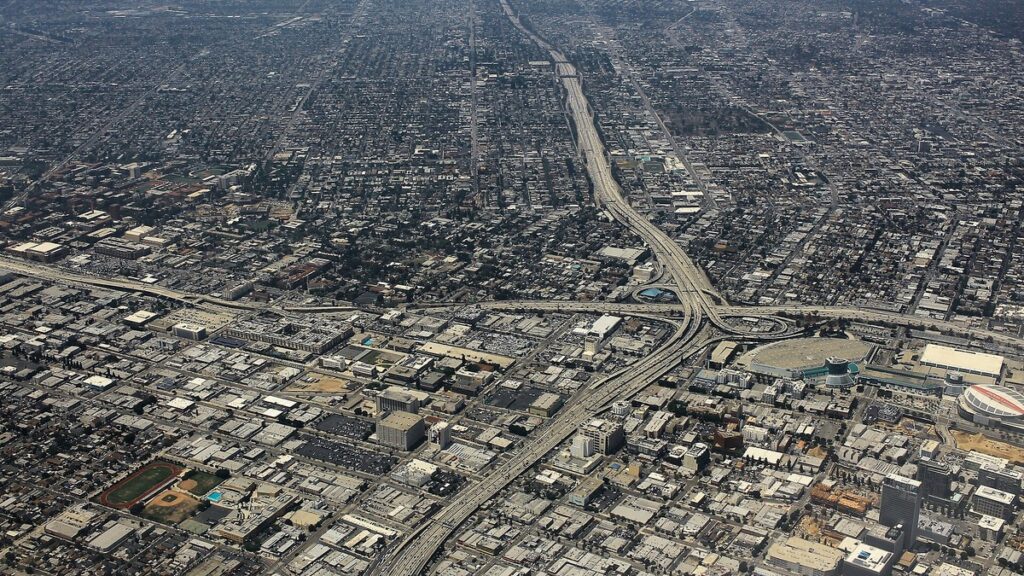
KTLA reported on November 23, 2026, citing the California Highway Patrol, that a wrong-way driver crashed into two other vehicles around 1:30 a.m. Monday on the eastbound 10 Freeway at the transition to the 110 Freeway in downtown Los Angeles. The station said the wrong-way driver was headed westbound in the eastbound lanes, that at least one person died, and that it was not yet clear in which vehicle the fatality occurred. A SigAlert closed all eastbound lanes at 2:30 a.m., KTLA reported.
ABC7 reported the same morning that the crash happened around 1 a.m. near the 110 interchange in the Pico-Union area. According to ABC7, the CHP said a white pickup traveling the wrong direction struck a black Honda sedan and a black security patrol vehicle. ABC7 reported that a sheet was seen over the driver’s side of the security vehicle, indicating that that person died, and that no other injuries were reported. The station also said investigators were trying to determine whether impairment played a role, and that eastbound lanes began reopening around 5 a.m.
Telemundo 52, citing City News Service and the CHP log, reported that the CHP learned at 1:33 a.m. that a white pickup was traveling west at about 50 mph in the fast lane of the eastbound 10 Freeway, and that an automatic crash notification involving a white Toyota Tacoma followed two minutes later. The first ambulance, the log said, described a pickup and two sedans, with one person trapped. A law-enforcement helicopter described the crash as head-on. One person died at the scene, the CHP reported, according to Telemundo. The log did not indicate the number or severity of other injuries. A SigAlert went out at 2:01 a.m., and lane 1 reopened at 4 a.m., the station reported.
NBC Los Angeles reported that the crash occurred around 1:30 a.m. on the eastbound 10 Freeway just before the 110, that the other driver was pronounced dead at the scene, and that the driver who was headed the wrong way fled. KTLA, ABC7, and Telemundo 52 did not repeat that the driver fled. This article does not treat flight as established.
On the security-vehicle description, the outlets do not yet agree. ABC7 identified a Honda sedan and a security patrol vehicle and reported that the fatality appeared to be in the security vehicle, with no other injuries reported. Telemundo, citing the first ambulance report in the CHP log, described a pickup and two sedans and said other injuries were not specified in the log. KTLA said two other vehicles were involved and that it was unclear which vehicle had the fatality. We do not treat the security-vehicle identification, or the count of other injuries, as settled.
The cause remains under investigation. Impairment, if it is later shown, is an open question and not a finding. Our sympathies go to everyone affected. We do not name anyone here, and we do not assign fault.
Who may be responsible?
Civil responsibility in California depends on the facts, including direction of travel, speed, visibility, impairment if it is later shown, and whether anyone’s conduct fell below the care required under the circumstances. News reports are not a finding of fault. Our guide to claims when someone is hit by a wrong-way driver in California explains this framework in general terms. Recent examples are discussed in our posts on a wrong-way crash on Highway 37 in Novato and a wrong-way crash on the 91 Freeway in Riverside.
- The other driver’s insurance. If a wrong-way driver is identified, that person’s auto liability coverage is often the first place a family looks.
- Uninsured or underinsured motorist coverage, and medical payments coverage. These first-party benefits can matter if the other driver has too little insurance, has not been identified, or if medical bills need to be addressed early. Review every involved policy.
- An on-the-job occupant. If later reporting confirms that an occupant was in a security patrol vehicle and was working, that person may have both a workers’ compensation claim and a third-party civil claim. News reports have not established who employed any security driver. If the employer was a public entity, a written government claim generally must be presented within six months. Our guide to filing a claim against the City of Los Angeles and our government-claims practice page explain that process in general terms. Nothing in the coverage we reviewed establishes a public employer.
- A public entity responsible for the freeway. Interstate 10 is a state highway. A later claim against Caltrans would require evidence of a dangerous condition of public property, not merely the fact that someone drove the wrong way. Nothing in the news reports establishes that the design, warnings or barriers were defective. If that kind of claim is later considered, our guide to filing a claim against Caltrans explains the usual process.
If a family is considering a death claim, our wrongful death and catastrophic injury page explains that framework in general terms. Motor vehicle claims more broadly are covered on our motor vehicle accidents page.
How long do families have to act?
A lawsuit against a private person or company generally must be filed within two years under Code of Civil Procedure section 335.1. If a public entity may later be involved, Government Code section 911.2 generally requires a written claim within six months. That six-month clock can run while the CHP is still investigating. Waiting for a complete investigative file can leave a family short on time.
Families can still request the crash report, ask in writing that nearby video and vehicle data be preserved, and, where the Public Records Act applies, request records. Those steps do not accuse anyone of fault. They protect the evidence if a claim is later evaluated.
What should a family do now?
- Make sure medical care and the death are documented, including which agencies responded.
- Get the report number from the California Highway Patrol.
- Ask in writing that nearby video, dispatch records and vehicle data be preserved.
- Review any auto or family insurance policies for uninsured or underinsured motorist coverage and medical payments coverage, and give any required notice.
- Do not sign releases or give recorded statements without advice.
- Calendar six months if a public entity may later be involved, under Government Code section 911.2. A lawsuit against a private person or company generally must be filed within two years under Code of Civil Procedure section 335.1.
Talk to us
If your family was affected by a wrong-way crash on the 10 Freeway in Los Angeles or anywhere in California, we are here to listen and explain your options. Win Attorneys represents injured people throughout California. Talk to us at (657) 235-8097. We speak Spanish and Vietnamese.
Hablamos español. Chúng tôi nói tiếng Việt.
Office
Win Attorneys
17291 Irvine Blvd., Suite 210, Tustin, CA 92780
This article is general information and is not legal advice. Reading it does not create an attorney-client relationship. The cause of the Pico-Union crash remains under investigation, and this article does not assign fault.
Sources: KTLA, November 23, 2026, NBC Los Angeles, November 23, 2026, ABC7, November 23, 2026, Telemundo 52 and City News Service, November 23, 2026, Government Code section 911.2, Code of Civil Procedure section 335.1.
Frequently asked questions
Who may pay after a wrong-way crash on the 10 Freeway in Los Angeles?
It depends on the facts. If a wrong-way driver is identified, that person’s auto insurance is often the starting point. Occupants may also look to uninsured or underinsured motorist coverage and medical payments coverage. A public entity may be part of the analysis only if later evidence supports a dangerous condition of public property, or if an on-the-job occupant had a public employer. A wrong-way crash on a freeway does not, by itself, mean Caltrans is responsible.
Have official reports said the wrong-way driver fled?
Not as a settled fact across the coverage we reviewed. NBC Los Angeles reported that the wrong-way driver fled. KTLA, ABC7, and Telemundo 52, citing City News Service and the CHP log, did not repeat that. This article does not treat flight as established.
What if an occupant was in a security patrol vehicle and on the job?
If later reporting confirms that, the occupant may have both a workers’ compensation claim and a third-party civil claim against a responsible private driver. If the employer was a public entity, a written government claim generally must be presented within six months. News reports have not established who employed any security driver.
Does it matter that investigators are looking at impairment?
ABC7 reported that investigators were trying to determine whether impairment played a role. That is an open question, not a finding. If impairment is later shown, it can matter to civil responsibility, but news reports are not a determination of fault.
How long do families have to file a claim?
A lawsuit against a private company or person generally must be filed within two years. A written claim against a California public entity generally must be presented within six months. Do not wait for the investigation to finish before calendaring those dates.
Do you speak Spanish or Vietnamese?
Yes. We speak Spanish and Vietnamese. Talk to us at (657) 235-8097. Our only office is at 17291 Irvine Blvd., Suite 210, Tustin, CA 92780.