
Hurt by a Machine at Work in California? When You Can Sue a Foreign Manufacturer
Modern warehouses, plants, and bottling lines run on industrial machines, and many of those machines are designed and built overseas. When one malfunctions and seriously injures a worker in California, the injured person often wants to hold the manufacturer accountable. But a California court can only hear a case against a company it has power over, and for a foreign manufacturer that is not automatic.
A published California Court of Appeal decision filed October 9, 2026 shows how that question plays out. In Fanuc Corp. v. Superior Court (case E086688), the Fourth Appellate District, Division Two, held that California courts did not have personal jurisdiction over a Japanese robot manufacturer in a lawsuit filed in San Bernardino County by a worker injured on the job at a bottling plant, on the record before it.
In plain terms: Personal jurisdiction is a court’s power to make a company or person answer a lawsuit in that state. For an out-of-state or foreign company, California courts need either “general” jurisdiction, where the company is essentially at home in California, or “specific” jurisdiction, where the lawsuit arises out of or relates to the company’s own contacts with California.
This page is general information, not legal advice. Case facts come from the published opinion, which describes the injured worker’s allegations. No court has decided whether any machine was defective.
If you were badly hurt by equipment at work or anywhere else in California, Win Attorneys handles personal injury and wrongful death and catastrophic injury matters statewide. Seek medical care first, and report the injury to your employer.
Talk to us at (562) 296-5380 or reach out through our contact page for a free case review. Office: 17291 Irvine Blvd., Suite 210, Tustin, CA 92780.
What Happened in Fanuc Corp. v. Superior Court
According to the opinion:
- The injury. In June 2020, an industrial machine called a depalletizer and a robot malfunctioned during a maintenance technician’s shift at the bottling company where he worked. He was assigned to troubleshoot them. As he was securing a ladder below the depalletizer’s gripper head, which was 15 to 20 feet above the floor, the depalletizer released the gripper head, severely injuring him.
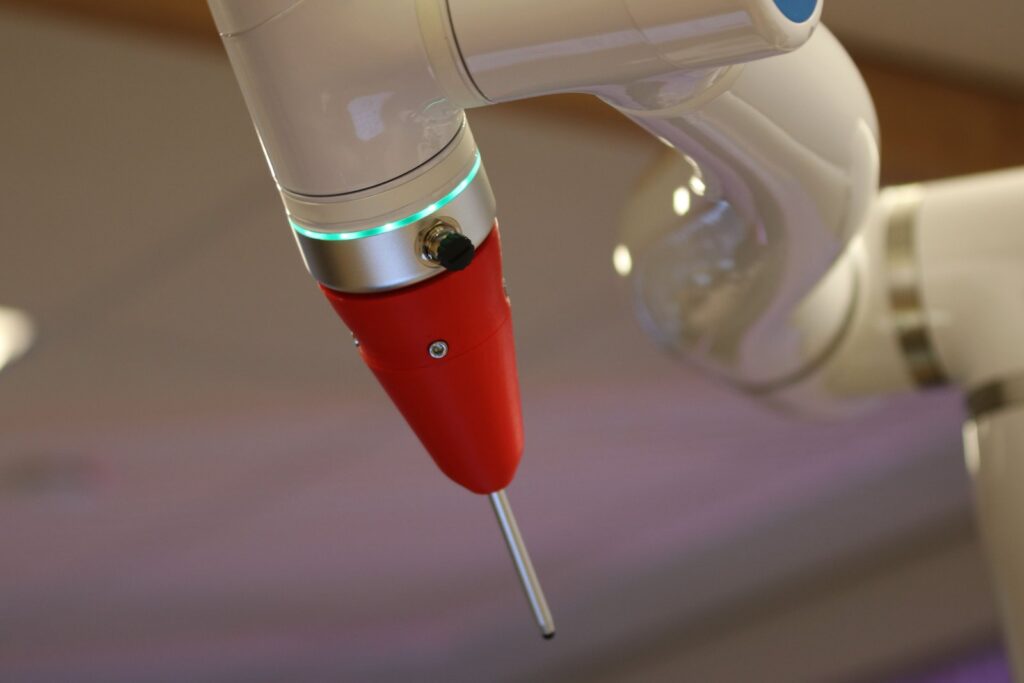
- The machines. A separate company made the depalletizer. Fanuc Corporation of Japan made the robot. The opinion says the robot had been bought by the depalletizer maker from a Fanuc entity in Europe.
- The defendants. The worker sued the depalletizer maker, the Japanese parent (the opinion calls it Fanuc Japan), and its wholly owned U.S. subsidiary, Fanuc America Corporation, a Delaware corporation with its principal place of business in Michigan. Fanuc America did not contest personal jurisdiction.
- The motion. Fanuc Japan specially appeared and moved to quash service for lack of personal jurisdiction. Its executive stated that it is organized and based in Japan, is not registered to do business in California, and has no California office, property, or bank accounts.
- The trial court. The San Bernardino County Superior Court denied the motion, finding general jurisdiction on an agency theory based on Fanuc Japan’s control over Fanuc America.
- The appeal. Fanuc Japan petitioned for a writ of mandate. The Court of Appeal granted relief, reversed the order, and directed the trial court to enter a new order granting the motion to quash.
No General Jurisdiction: The “At Home” Test
California’s long-arm statute, Code of Civil Procedure section 410.10, lets courts exercise jurisdiction on any basis consistent with the state and federal constitutions. So the court applied U.S. Supreme Court due process cases.
General jurisdiction covers any claim, but only where a corporation is “essentially at home,” usually its place of incorporation and principal place of business, as the opinion explains from Daimler AG v. Bauman (2014) and BNSF Railway Co. v. Tyrrell (2017). Fanuc Japan is incorporated and based in Japan, with no California office, registration, accounts, or property.
The worker argued that Fanuc America’s contacts should be imputed to its parent as an agent or alter ego. The court said that even assuming those theories survive, they could not help here: Fanuc America itself is incorporated in Delaware and based in Michigan, so it is not at home in California even if it does significant business here. Imputing its contacts to the parent would not make the parent at home in California either. The court relied heavily on Daimler, which rejected a similar attempt to reach a foreign parent through a U.S. distributor subsidiary.
No Specific Jurisdiction: The Relatedness Problem
Specific jurisdiction, the opinion explains, has three requirements:
- Purposeful availment. The defendant must purposefully avail itself of the privilege of conducting activities in California.
- Relatedness. The claims must arise out of or relate to the defendant’s contacts with California.
- Reasonableness. Exercising jurisdiction must be reasonable. If the plaintiff proves the first two, the burden shifts to the defendant on this one.
The court focused only on relatedness. It assumed, without deciding, that Fanuc America acted as Fanuc Japan’s agent, so Fanuc Japan could be treated as having purposefully availed itself of California through sales, distribution, and three California service locations. It did not reach reasonableness.
How the Court Applied Ford Motor Co. v. Montana
The court compared the case to Ford Motor Co. v. Montana Eighth Judicial District Court (2021), where the U.S. Supreme Court upheld jurisdiction because Ford had systematically advertised, sold, and serviced the very car models that injured the plaintiffs in their home states.
Here, the court found the worker had not made a similar showing:
- He did not point to any sale of the specific robot model to anyone in California by either Fanuc company.
- He did not show either company installed that robot in California or marketed that model to California customers.
- Evidence that his employer bought other Fanuc robots showed little about whether his claim related to California contacts.
- The existence of three California service centers did not help, because the evidence did not show any of them repaired this robot after the accident. And even one such repair would be a single data point.
The court added that it was not suggesting Fanuc Japan could never be subject to specific jurisdiction in California in a product liability case. Perhaps it could be on a different claim or a different record.
What This Means for Injured Workers
The ruling is about where and whom you can sue. It does not decide whether any machine was defective, and it addresses only the Japanese parent, not the claims against the other defendants.
- Domestic subsidiaries and distributors matter. In this case, the U.S. subsidiary did not contest jurisdiction. U.S. companies that sell, distribute, install, or service a machine may be defendants that California courts can reach.
- Model-specific evidence matters. Under Ford as applied here, evidence that the manufacturer served a California market for the same model can be important. General evidence of a big business presence may not be enough.
- Build the record early. Sales, shipping, installation, service, and marketing records for the specific machine can decide a jurisdiction fight. The court noted what the worker did and did not include in his showing.
- Other forums. The court said whether general jurisdiction could be established over the parent in Delaware or Michigan was not before it. Where else a case can be brought is a strategic question for counsel.
Workers’ Compensation and Third-Party Claims
Most workplace injuries start with workers’ compensation.
The Exclusive Remedy Rule
Under Labor Code section 3600, when the conditions of compensation are met, an employer is liable for workers’ compensation benefits for an employee’s injury arising out of and in the course of employment, without regard to negligence. Labor Code section 3602 makes workers’ compensation the sole and exclusive remedy against the employer, with limited exceptions listed in the statute, including injury or death proximately caused by:
- A willful physical assault by the employer.
- The employer’s fraudulent concealment of the injury and its connection with the employment, which aggravates it, limited to the aggravation.
- A defective product manufactured by the employer, sold or transferred to an independent third person, and then provided for the employee’s use by a third person.
Claims Against Third Parties
Workers’ compensation does not shut the door on everyone else. Labor Code section 3852 provides that an employee’s claim for compensation does not affect the employee’s right of action for all damages against any person other than the employer. That can include manufacturers, distributors, installers, maintenance contractors, and property owners whose conduct or products contributed to the injury.
Section 3852 also allows an employer who pays compensation to make a claim or bring an action against the third person, so third-party cases often involve coordinating with the workers’ compensation carrier.
Deadlines
The general deadline to file a personal injury or wrongful death lawsuit in California is two years under Code of Civil Procedure section 335.1. Workers’ compensation claims have their own separate procedures and timelines. Product cases against foreign companies can also take extra time for service and jurisdiction disputes, so start early.
Evidence to Preserve After a Machine Injury at Work
- Machine identification: manufacturer, model, serial number, and labels.
- Photos and video of the machine and work area, if safe and permitted.
- Purchase, installation, and service records for that specific machine, including who sold, installed, and repaired it.
- Incident reports and safety records from your employer.
- Witness names.
- Medical records from the first visit forward.
- A preservation request so the machine and its parts are not altered, repaired, or discarded before inspection.
Talk With Win Attorneys
Win Attorneys helps seriously injured people across California from our Tustin office. If an industrial machine hurt you or a loved one, we can help sort out workers’ compensation from third-party claims and identify who can be sued here. Our office is fluent in Spanish and Vietnamese; say so when you call.
Talk to us at (562) 296-5380, write through our contact page, or visit 17291 Irvine Blvd., Suite 210, Tustin, CA 92780. The case review is free.
Foreign Manufacturer Injury FAQs
Can I sue a foreign manufacturer in California if its machine injured me at work?
Sometimes. A California court needs personal jurisdiction over the company. In Fanuc Corp. v. Superior Court, the Court of Appeal held that California lacked jurisdiction over a Japanese robot maker on that record, while its U.S. subsidiary did not contest jurisdiction. The answer depends on the company’s contacts with California and how they relate to the specific product.
What is the difference between general and specific personal jurisdiction?
General jurisdiction lets a court hear any claim against a company that is essentially at home in the state, usually where it is incorporated or has its principal place of business. Specific jurisdiction covers claims that arise out of or relate to the company’s own contacts with the state.
Why did the court rule for the Japanese manufacturer in the Fanuc case?
The court held the parent was not at home in California, even counting its U.S. subsidiary’s contacts, because the subsidiary is based in Michigan and incorporated in Delaware. On specific jurisdiction, the worker did not show that the specific robot model was sold, installed, or marketed in California, so relatedness was not established.
Can I sue my employer if a machine injured me at work?
Usually not in a lawsuit. Labor Code section 3602 makes workers’ compensation the exclusive remedy against the employer, except in limited situations listed in the statute, such as a willful physical assault by the employer or certain defective products the employer made and sold to others.
Can I get workers’ compensation and also sue the machine manufacturer?
Often, yes. Labor Code section 3852 says a workers’ compensation claim does not affect the employee’s right to sue any person other than the employer for all damages. The employer or its carrier may also have a claim against that third party.
Who else can be responsible when a workplace machine injures someone?
Depending on the facts, possible defendants include the manufacturer, a U.S. subsidiary or distributor, the company that installed or serviced the machine, and the maker of connected equipment. Each defendant’s role and contacts with California matter.
How long do I have to file a lawsuit after a workplace machine injury in California?
The general deadline for a personal injury or wrongful death lawsuit is two years under Code of Civil Procedure section 335.1. Workers’ compensation has separate procedures. Cases against foreign companies can take longer to set up, so talk to a lawyer early.
Related Pages
- Personal injury
- Wrongful death and catastrophic injury
- Premises liability
- Win Attorneys home
- Contact
Disclaimer
This page is general information for educational purposes. It is not legal advice and does not create an attorney-client relationship. Case facts are taken from the published opinion in Fanuc Corp. v. Superior Court (Cal. Ct. App., Fourth Dist., Div. Two, No. E086688, filed October 9, 2026), which describes allegations that have not been proven. Outcomes depend on the facts of each matter. Seek medical care for injuries. Consult a licensed California attorney about your situation.