
Last updated
Read this article in Español.
Early on Sunday, November 15, 2026, a pedestrian was struck and killed on Bristol Street near Edinger Avenue in Santa Ana. Police say the driver was speeding, ran several red lights, and was later booked on suspicion of vehicular manslaughter and driving under the influence. This article explains what has been reported and who may pay a family after a DUI pedestrian death in California. We do not name the person who died or the driver, and an arrest is not a conviction.
Win Attorneys handles pedestrian and wrongful death claims throughout California from our only office in Tustin. We speak Spanish and Vietnamese.
What police reported
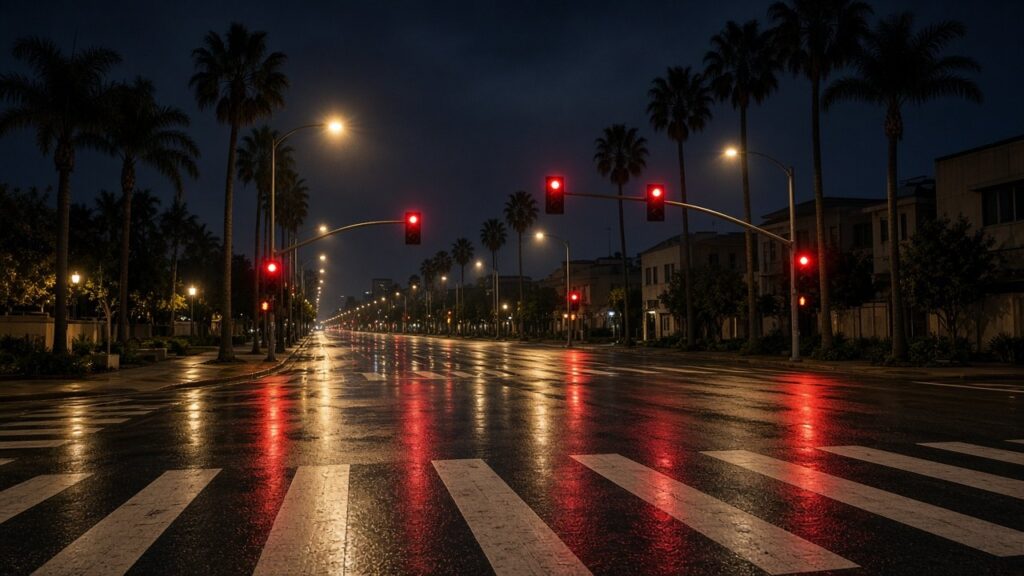
According to CBS Los Angeles, which quoted a Santa Ana Police Department release, officers saw a vehicle traveling at a high rate of speed on Bristol Street near Edinger Avenue at about 2 a.m. Police said the vehicle ran several red traffic lights before striking a pedestrian. Orange County Fire Authority paramedics pronounced the pedestrian dead at the scene.
Police said the crash disabled the vehicle, and officers who contacted the driver observed signs of possible impairment. After a DUI investigation, the driver was booked for vehicular manslaughter and driving under the influence. The person who died had not been publicly identified, and police asked anyone with information to contact the department. The investigation was continuing when this was written.
Those are police allegations. A booking is not a conviction, and the criminal case will decide criminal guilt. A family’s civil claim is a separate case with a different standard of proof.
Who may pay the family after a DUI pedestrian death?
Usually the at-fault driver’s auto liability insurance is the first source. Other layers may apply, depending on the facts:
- The driver’s liability policy. California’s minimum bodily injury limits for policies issued or renewed on or after January 1, 2025, are $30,000 per person and $60,000 per accident. Many drivers carry more, and some carry none. Our article on California’s 30, 60, 15 minimum limits explains what that means for a claim.
- The vehicle owner. If the driver did not own the car, Vehicle Code section 17150 can make the owner responsible for a permissive driver’s negligence, though section 17151 generally caps that owner liability unless the owner was also at fault in his or her own right.
- The family’s own coverage. Uninsured and underinsured motorist coverage under Insurance Code section 11580.2 can cover the named insured and resident relatives even when they are not in a car. That can matter when the driver’s policy is missing or too small. See our UM and UIM claims page.
- Criminal restitution and victim help. The criminal court can order restitution, and the California Victim Compensation Board can help with funeral and some other costs after a DUI crash, after other sources pay. Neither replaces a civil claim.
Families sometimes ask whether a bar or a party host can be held responsible. California law generally protects people who serve alcohol to adults, under Civil Code section 1714 and Business and Professions Code section 25602, with narrow exceptions involving minors. Nothing reported so far points to anyone other than the driver.
Wrongful death claims and punitive damages
Under Code of Civil Procedure section 377.60, a spouse, domestic partner, children, and certain other family members may bring a wrongful death claim. Wrongful death damages cover the family’s own losses, such as financial support, household services, funeral and burial costs, and the loss of love and companionship. Our wrongful death and catastrophic injury page explains who may file.
Punitive damages are meant to punish and deter. Civil Code section 3294 allows them when a plaintiff proves malice, oppression, or fraud by clear and convincing evidence, and in Taylor v. Superior Court (1979) 24 Cal.3d 890, the California Supreme Court held that a decision to drive while intoxicated can support a finding of malice. In California, punitive damages are generally not part of a pure wrongful death claim. A survival claim brought for the estate may be the way to seek them. California public policy also generally bars insurance from paying punitive damages, so any award usually has to come from the driver personally. Our guides to who pays after a fatal DUI crash and DUI punitive damages go deeper.
Evidence that can matter
- The Santa Ana Police Department report number, and later supplements.
- Chemical test results and the DUI investigation file, usually obtained through counsel or the criminal case.
- Video from businesses, buses, and traffic cameras along Bristol Street, requested quickly because many systems overwrite footage in days.
- Signal timing records showing the lights were red, if that becomes disputed.
- The vehicle’s event data recorder, which may show speed and braking before impact.
- Medical, coroner, and funeral records, and proof of the family’s financial losses.
Be careful with recorded statements to any insurer before the family understands its claim. Our article on Orange County pedestrian crash claims covers evidence and deadlines after a pedestrian is hurt or killed, and our Santa Ana injury page covers local steps.
Deadlines
Most California wrongful death and injury lawsuits must be filed within two years under Code of Civil Procedure section 335.1. UM and UIM claims have their own timing rules under the policy and section 11580.2. Nothing reported suggests a road or signal problem, so a government claim is not part of this picture on the facts known today. If one ever were, a written claim would generally be due within six months.
Talk to us
Win Attorneys handles DUI, pedestrian, and wrongful death claims statewide from our only office at 17291 Irvine Blvd., Suite 210, Tustin, CA 92780. We speak Spanish and Vietnamese. We do not represent anyone involved in this crash.
Call us at (657) 235-8097, reach us through our contact page, or start online with our intake form.
This article is general information and is not legal advice. Reading it does not create an attorney-client relationship. It does not decide fault or guilt in the November 15, 2026 crash on Bristol Street, and it does not name anyone involved.
Sources
- CBS Los Angeles, “25-year-old Orange County man arrested for alleged DUI after deadly Santa Ana crash,” November 15, 2026, quoting a Santa Ana Police Department release. Fetched November 16, 2026. The article includes identifying details that we are not repeating.
- Code of Civil Procedure section 377.60; Civil Code section 3294; Insurance Code section 11580.2; Vehicle Code section 17150; Code of Civil Procedure section 335.1.
Frequently asked questions
What happened on Bristol Street in Santa Ana on November 15, 2026?
Santa Ana police said officers saw a vehicle speeding on Bristol Street near Edinger Avenue at about 2 a.m. and that it ran several red lights before striking a pedestrian, who died at the scene. The driver was booked for vehicular manslaughter and DUI, according to a police release reported by CBS Los Angeles. An arrest is not a conviction.
Who pays the family after a DUI driver kills a pedestrian in California?
Usually the at-fault driver’s auto liability insurance pays first. The vehicle owner’s coverage, the family’s own uninsured or underinsured motorist coverage, criminal restitution, and help from the California Victim Compensation Board may also apply, depending on the facts.
Can the family get punitive damages from a drunk driver?
Possibly, on the right facts. Civil Code section 3294 allows punitive damages on clear and convincing proof of malice, and the California Supreme Court has held that choosing to drive drunk can support malice. Punitive damages are generally sought through a survival claim for the estate rather than the wrongful death claim, and insurance generally cannot pay them.
Does the family have to wait for the criminal case to finish?
No. The civil claim and the criminal case are separate. They are often coordinated, and evidence from the criminal case can help the civil claim, but the family does not have to wait for a verdict to protect its rights.
How long does a family have to file a wrongful death lawsuit?
Most California wrongful death lawsuits must be filed within two years of the death. Insurance claims can have shorter notice rules, so it helps to act early.
Do your lawyers speak Spanish or Vietnamese?
Yes. We speak Spanish and Vietnamese, and we help people statewide from our only office at 17291 Irvine Blvd., Suite 210, Tustin, CA 92780.