
Last updated
By Ron McMinn, Esq. | Last updated November 19, 2026.
Read this article in Español or Tiếng Việt.
If a robotaxi hits you in California, the hard questions are who may have to pay, what a DMV permit restriction does and does not decide, and what evidence can disappear. This article uses the California Department of Motor Vehicles’ November 11, 2026 restriction on Waymo freeway operations to explain those rules. It does not decide fault in the incidents the DMV cited. A permit restriction is not a finding about any particular crash.
Win Attorneys handles robotaxi and other injury claims throughout California from our only office in Tustin. We speak Spanish and Vietnamese.
What the DMV ordered, and what was reported
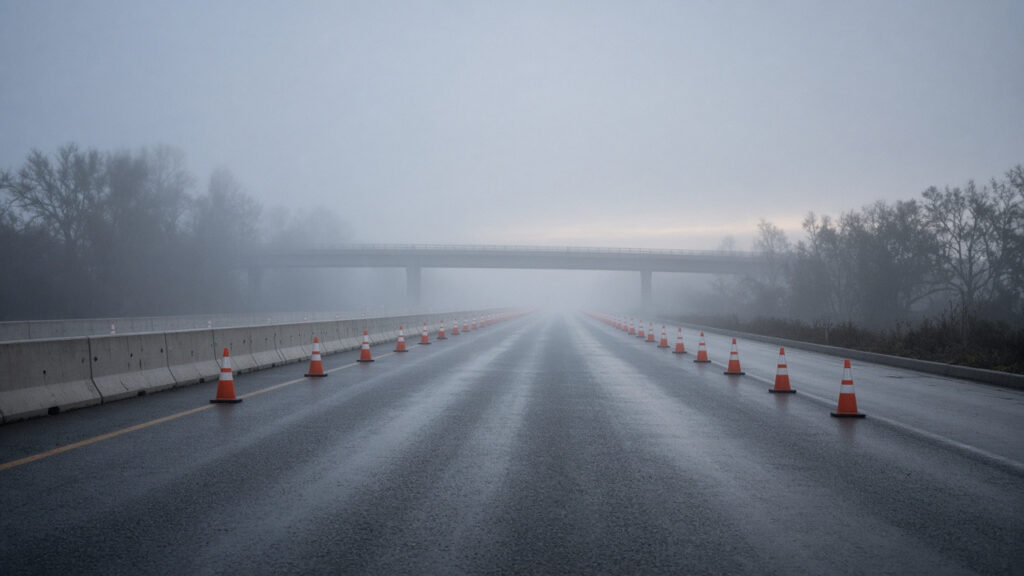
TechCrunch reported on November 17, 2026 that the California DMV, which regulates the testing and deployment of autonomous vehicles in the state, issued operational restrictions on Waymo on November 11. The restrictions were not made public until Tuesday, November 17. According to the DMV’s statement to TechCrunch, the department acted after three Waymo autonomous vehicles entered an active construction closure on U.S. Route 101 near Burlingame, and after a separate incident involving California Highway Patrol vehicles on Highway 280 in San Francisco.
NBC Bay Area reported on November 11 that video showed a driverless Waymo trying to get around CHP patrol cars during a traffic break on northbound I-280 in San Francisco. In a statement to NBC Bay Area, the CHP said multiple officers used their cruisers to block the vehicle’s path, and that the Waymo ultimately complied and stayed back with traffic. Later coverage by CBS News in San Francisco, NBC Bay Area, and KQED tied that incident, together with the U.S. 101 construction-zone entries, to the DMV’s freeway restriction. The reporting does not describe a collision or injuries in those freeway incidents. This article does not assign fault to Waymo, the CHP, or anyone else.
The DMV told TechCrunch that Waymo’s driverless freeway operations “pose an imminent hazard to public safety due to recurring incursions by its vehicles into active construction zones where construction workers, vehicles and equipment are present, despite a prior restriction and corrective actions implemented following similar incidents that occurred on May 18, 2026.” The restrictions, the department said, remain in place until Waymo demonstrates that it has taken “effective corrective actions.” CBS News in San Francisco reported that the DMV would review evidence that the vehicles can detect and respond to construction zones, emergency vehicles, and other roadway situations.
Waymo complied in California and also restricted freeway operations in its other markets. TechCrunch reported that Waymo has commercial operations in 15 U.S. cities, and that freeway rides began in late 2025, paused in May 2026, and returned in July after the company said it updated its software for freeway construction zones. A Waymo spokesperson told TechCrunch that the recent U.S. 101 construction-zone encounters “did not involve any injuries or collisions,” that the company temporarily restricted freeway operations across other markets “to evaluate our performance,” that its ride-hailing service “continues to operate safely on surface streets, serving over half a million trips each week,” and that it is working with the DMV and other state officials to resume freeway operations.
What the restriction means for the DMV permit
The DMV issues the permits that allow a company to test or deploy driverless vehicles in California. The November 11 order did not end Waymo’s service. It restricted Waymo from operating or testing its driverless vehicles on all California freeways until the company shows effective corrective actions. Surface-street service has continued, according to Waymo and the news reports. A later crash on a surface street, or on a freeway if freeway service resumes, is still evaluated on its own facts. The existence of a permit, or of a restriction, is not a verdict about who caused an injury.
Work-zone and emergency-vehicle crashes
The incidents the DMV cited involve two settings that often produce overlapping evidence: a freeway construction closure, and CHP vehicles holding traffic. If someone is hurt in a work zone or near emergency vehicles, the same basic questions arise as in any crash: what happened, who may share responsibility, and what records exist. A construction closure or a traffic break can involve contractors, public agencies, and other drivers, in addition to the autonomous vehicle operator. California uses comparative fault, so more than one party may share responsibility. A DMV restriction, a news report, or an open investigation does not, by itself, prove that any party was at fault in a later crash, or in the incidents already reported.
Who may pay if a robotaxi hits you
Responsibility depends on the facts, not on the type of vehicle alone. Our robotaxi and rideshare practice page and our earlier guides on who pays after a driverless car crash, Waymo’s California expansion and the rules if you are hurt, and what to save after a Waymo or robotaxi crash explain the same framework in more detail.
- The operator and its insurance or self-insurance. With no human driver, a claim often focuses on the company that put the vehicle on the road and on that company’s insurance, surety bond, or self-insurance. Vehicle Code section 38750 requires a manufacturer testing or deploying autonomous vehicles to have an instrument of insurance, a surety bond, or proof of self-insurance of $5,000,000. Actual coverage in a given crash is something counsel confirms. California’s general negligence rule, Civil Code section 1714, still requires ordinary care. A DMV restriction does not, by itself, establish that the company failed to use ordinary care in a later crash.
- Another motorist. If another driver was involved, that driver’s insurance is often a direct claim. California uses comparative fault, so responsibility can be shared.
- Your own coverage. Medical payments coverage and uninsured or underinsured motorist coverage on your own auto policy, and health insurance, may also apply, including if you were a passenger. Policy language controls.
- A public entity, when the facts support it. If a public agency or a public work zone may share responsibility, a written claim generally must be presented within six months under Government Code section 911.2. See our government claims page. An investigation does not extend that deadline.
Evidence to request
Ask the autonomous vehicle company, in writing, to keep vehicle video and sensor data, remote support logs, and other trip records. Also save:
- The police or CHP report number, and the names of witnesses.
- Photographs and, if you were a rider, your trip receipt or app records.
- Medical records and bills.
- Any later filings with the DMV or the National Highway Traffic Safety Administration, including collision or complaint reports when they become available.
- If the crash was in a work zone or near emergency vehicles, any closure, cone, or traffic-break records that can still be requested.
A prompt written preservation request matters, even if some pre-crash data must already be stored for a period of years. You are not required to give a recorded statement to the other side, and you should not sign a release without legal advice.
Talk to us
Win Attorneys handles robotaxi and other injury claims throughout California from our only office at 17291 Irvine Blvd., Suite 210, Tustin, CA 92780. We speak Spanish and Vietnamese.
Call us at (657) 235-8097, reach us through our contact page, or start online with our intake form.
This article is general information and is not legal advice. Reading it does not create an attorney-client relationship. It does not decide fault in the November 2026 freeway incidents the DMV cited, and it does not report any official finding of liability.
Sources
- TechCrunch, “Waymo suspends freeway rides nationwide after California DMV order,” November 17, 2026.
- NBC Bay Area, “Video shows Waymo trying to get around CHP traffic break on Bay Area freeway,” November 11, 2026.
- NBC Bay Area, “Waymos temporarily banned from California freeways,” November 2026.
- CBS News San Francisco, “California DMV blocks Waymo robotaxis from freeways after construction zone incidents,” November 2026.
- KQED, “’Hazard to Public Safety’: California DMV Restricts Waymo Freeway Operations,” November 2026.
- Vehicle Code section 38750, Civil Code section 1714, and Government Code section 911.2.
Frequently asked questions
Does the DMV order mean Waymo is automatically at fault if a robotaxi hits me?
No. The November 11, 2026 restriction limits freeway testing and operations until Waymo shows effective corrective actions. It is not a civil finding of fault in any particular crash. Liability still depends on the facts.
Are Waymo robotaxis still operating in California?
Yes, according to Waymo and the news reports, ride-hailing has continued on surface streets. The DMV restricted freeway operations and testing. That can change if the DMV later finds that corrective actions are effective.
Who may pay if a robotaxi hits me in California?
Depending on the facts, possible sources include the autonomous vehicle company and its insurance or self-insurance, another motorist, and your own medical payments or uninsured or underinsured motorist coverage. If a public entity may share responsibility, a written claim generally must be presented within six months.
What evidence should I request after a robotaxi crash?
Ask the company, in writing, to keep vehicle video, sensor data, and logs. Also save the police report number, photographs, trip records if you were a rider, witness names, medical bills, and any later DMV or NHTSA filings.
Do your lawyers speak Spanish or Vietnamese?
Yes. We speak Spanish and Vietnamese, and we help people statewide from our only office at 17291 Irvine Blvd., Suite 210, Tustin, CA 92780.