
Last updated
By Ron McMinn, Esq. | Last updated: November 23, 2026
Who may pay after a helicopter crash in Temecula?
Two people died after a helicopter crashed into a hillside in Temecula on Monday morning, November 23, 2026. This guide explains, in general terms, who may pay after a fatal helicopter crash in California. We name no one, and we do not assign fault.
Short answer: It depends on the facts, and the facts here are still limited. Families often start with aviation liability coverage that may apply to the operator, the pilot, or the aircraft owner. Maintenance providers, and in some cases a manufacturer, may be part of the analysis only if later evidence supports it. A public entity may be involved only if later evidence supports a dangerous condition of public property or another legal basis. Taking off from a county airport, or coming down on public property, does not by itself decide who pays. Shared fault is possible and does not by itself bar a claim. Some deadlines are short.
What was reported about the Temecula crash?
ABC7 reported on November 23, 2026, that two people died after a helicopter crashed into a hillside in Temecula Monday morning. According to ABC7, the Riverside County Sheriff’s Office said the crash happened around 9:30 a.m. in the area of De Portola Road and Oak Mountain Road, and that deputies found two people dead. ABC7 reported that the Federal Aviation Administration identified the aircraft as a Robinson R22, that only two people were on board, and that additional details about the cause were not available. The FAA and the National Transportation Safety Board are investigating, ABC7 reported.
CBS Los Angeles, KTLA, and NBC Los Angeles reported the same core facts that morning: a crash around 9:30 a.m. in the area of De Portola Road and Oak Mountain Road, a Robinson R22, two people on board, both dead, and an investigation by the FAA and the NTSB. CBS, citing Cal Fire Riverside County, placed the crash near several wineries and reported that the airport confirmed the helicopter took off from French Valley Airport at 9:17 a.m. KTLA said the crash was reported on Oak Mountain Road, east of De Portola Road, and that identities had not yet been released. KESQ reported that the Riverside County Fire Department said crews responded at about 9:35 a.m., that both occupants were pronounced dead at the scene, and that they were identified as the pilot and a passenger. KESQ also said a departure point had not immediately been released. On the departure, we follow the later CBS account that the airport confirmed a 9:17 a.m. takeoff from French Valley Airport. The reports we reviewed do not identify a destination.
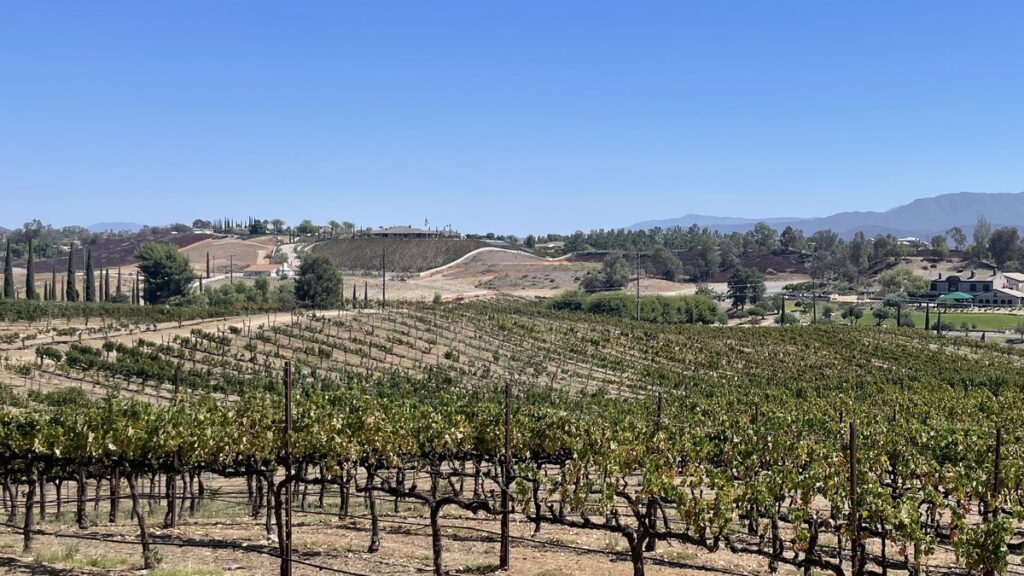
The Press Enterprise, citing Cal Fire, reported that the helicopter crashed on Rancho California Water District property in Temecula Valley wine country, and that a water district spokeswoman said it came down on groundwater basins, with no damage to district property and no interruption of service. In that early account, the paper said no information on the type of helicopter was immediately available. Later reporting from ABC7, CBS, KTLA, NBC, and Patch, citing the FAA, identified a Robinson R22. Patch reported that the area is remote, east of the De Portola Wine Trail, and accessible only by dirt roads, that there were no road closures, and that the Sheriff’s Department said the coroner’s bureau, the FAA, and the NTSB had been requested to assume the investigation, with the NTSB in the lead.
The cause remains under investigation. The reports we reviewed have not said why the helicopter went down, who was flying, whether it was a training, rental, or private flight, or who owned or operated the aircraft. We do not fill in those gaps. Our sympathies go to the families and to everyone affected.
Who may be responsible?
In general terms, these are the paths that often come up after a fatal helicopter crash in California. None of them is a finding about this flight. Our guide to who may be liable after a private aircraft crash explains that broader framework.
- The operator, the pilot, and aviation liability insurance. If an operator or pilot is identified, aviation liability coverage is often the first place a family looks. Whether anyone failed to use reasonable care is a fact question that the news reports do not answer.
- The aircraft owner. The owner may be a different person or company than the pilot. Ownership, lease, and rental records can matter, especially if the helicopter was borrowed or rented. The reports we reviewed have not identified an owner.
- Maintenance and, in some cases, a manufacturer. A maintenance provider may be part of the analysis only if later evidence supports a problem with inspection or repair. A manufacturer or part maker may be part of the analysis only if later evidence supports a product defect. Nothing in the coverage we reviewed establishes either one.
- A workplace claim, if later facts show someone was working. If later reporting shows that a person on board was working, that person’s family may have both a workers’ compensation claim and a third-party civil claim. The reports have not said whether this was a commercial, training, or private flight, and we do not assume that it was.
- A public entity, only if later evidence supports it. Riverside County{A}s Transportation and Land Management Agency states that the County owns and operates French Valley Airport. CBS Los Angeles reported that the airport confirmed the helicopter took off from there at 9:17 a.m. Taking off from a county airport does not, by itself, mean the County is responsible. The Press Enterprise, citing Cal Fire, reported that the aircraft came down on Rancho California Water District property, and that the district said there was no damage and no interruption of service. Coming down on public property does not, by itself, mean the district is responsible. A public entity becomes part of the analysis only if later evidence supports a dangerous condition of public property or another legal basis. If that kind of claim is later considered, a written claim generally must be presented within six months. Our guide to filing a claim against the County of Riverside and our government-claims practice page explain that process in general terms.
Our Riverside and Temecula page covers local resources. Death claims in general terms are covered on our wrongful death and catastrophic injury page. A different kind of helicopter claim, involving a load that falls during a lift, is discussed in our guide to falling helicopter loads.
Does shared fault still leave room for a claim?
It can. California uses comparative negligence, which means fault can be shared and a person’s own share, if any, can reduce what is recovered without automatically barring a claim. In a wrongful death claim, a decedent’s share of fault, if any, can reduce what the family recovers. News reports have not assigned fault in this crash, and this article does not either.
Who can bring a wrongful death claim?
Under Code of Civil Procedure section 377.60, a wrongful death claim generally may be brought by a surviving spouse or domestic partner and children and, if there are none, other heirs, and in some cases parents or stepchildren who depended on the person who died. Who qualifies depends on the family. A separate survival claim, brought by a personal representative or successor in interest, can address the person’s own losses before death. California changed the rules on those damages in 2026, and our post on survival action damages explains the change.
How long do families have to act?
A lawsuit against a private person or company generally must be filed within two years under Code of Civil Procedure section 335.1. If a public entity may later be involved, Government Code section 911.2 generally requires a written claim within six months. Those clocks can run while the FAA and the NTSB are still investigating. A final investigation report can take many months, or longer. Waiting for that report can leave a family short on time.
Families can still request investigative file numbers, ask in writing that wreckage, maintenance records, flight and airport records, and any nearby video or flight-tracking data be preserved, and, where the Public Records Act applies, request records. Those steps do not accuse anyone of fault. They protect the evidence if a claim is later evaluated.
What should a family do now?
- Make sure the deaths and the agencies that responded are documented, including the Sheriff’s Department, the coroner’s bureau, Cal Fire, the FAA, and the NTSB.
- Get the report and inquiry numbers from those agencies as they become available.
- Ask in writing that wreckage, maintenance and ownership records, flight and airport records, dispatch recordings, and any available video or flight-tracking data be preserved.
- Review every applicable insurance policy, including aviation liability coverage that may apply to the aircraft, the operator, or the owner, and give any required notice.
- Do not sign releases or give recorded statements without advice.
- Calendar six months if a public entity may later be involved, under Government Code section 911.2. A lawsuit against a private person or company generally must be filed within two years under Code of Civil Procedure section 335.1.
Talk to us
If your family was affected by the Temecula helicopter crash or by an aircraft crash anywhere in California, we are here to listen and explain your options. Win Attorneys represents injured people and families throughout California. Talk to us at (657) 235-8097. We speak Spanish and Vietnamese.
Hablamos español. Chúng tôi nói tiếng Việt.
Office
Win Attorneys
17291 Irvine Blvd., Suite 210, Tustin, CA 92780
This article is general information and is not legal advice. Reading it does not create an attorney-client relationship. The cause of the Temecula helicopter crash remains under investigation, and this article does not assign fault.
Sources: ABC7, November 23, 2026, CBS Los Angeles, November 23, 2026, KTLA, November 23, 2026, NBC Los Angeles, November 23, 2026, KESQ, November 23, 2026, The Press Enterprise, November 23, 2026, Patch, November 23, 2026, Government Code section 911.2, Code of Civil Procedure section 335.1, Code of Civil Procedure section 377.60
Frequently asked questions
Who may pay after a helicopter crash in Temecula?
It depends on the facts, which are still limited. Families often start with aviation liability coverage that may apply to the operator, the pilot, or the aircraft owner. Maintenance providers, and in some cases a manufacturer, may be part of the analysis only if later evidence supports it. A public entity may be involved only if later evidence supports a dangerous condition of public property or another legal basis. Taking off from a county airport, or coming down on public property, does not by itself decide who pays.
What was reported about the November 23 crash in Temecula?
ABC7, CBS Los Angeles, KTLA, NBC Los Angeles, and other outlets reported that two people died after a helicopter crashed into a hillside in the area of De Portola Road and Oak Mountain Road around 9:30 a.m. on Monday, November 23, 2026. The FAA identified the aircraft as a Robinson R22 with two people on board. CBS Los Angeles reported that the airport confirmed the helicopter took off from French Valley Airport at 9:17 a.m. The Press Enterprise, citing Cal Fire, reported that it came down on Rancho California Water District property. The cause has not been announced. Identities have not been released in the coverage we reviewed.
Does it matter that the helicopter took off from French Valley Airport or came down on water district property?
It can matter to the investigation and to evidence, but it does not, by itself, mean a public entity is responsible. Riverside County owns and operates French Valley Airport. The Press Enterprise reported that the aircraft came down on Rancho California Water District property, and that the district said there was no damage to district property and no interruption of service. A written claim against a California public entity generally must be presented within six months, if that kind of claim is later considered.
Who can bring a wrongful death claim after a helicopter crash?
Under Code of Civil Procedure section 377.60, a wrongful death claim generally may be brought by a surviving spouse or domestic partner and children and, if there are none, other heirs, and in some cases parents or stepchildren who depended on the person who died. Who qualifies depends on the family. A separate survival claim can address the person’s own losses before death.
How long do families have to act, and should they wait for the NTSB?
A lawsuit against a private person or company generally must be filed within two years. A written claim against a California public entity generally must be presented within six months. Those clocks can run while the FAA and the NTSB are still investigating. Families should not wait for a final investigation report before calendaring those dates.