
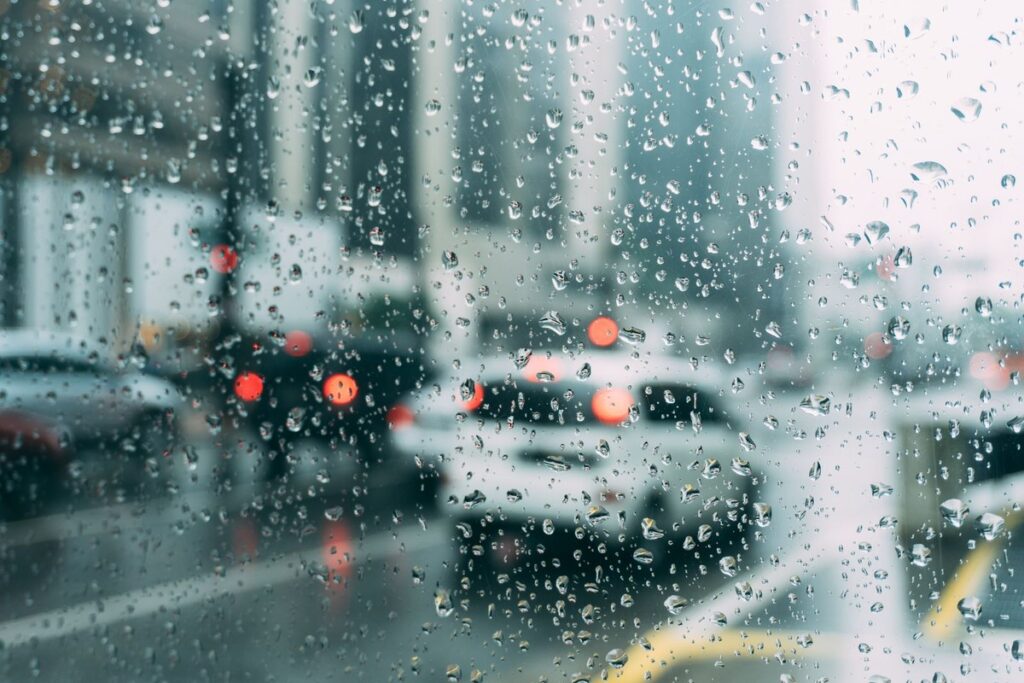
California sunshine sells the postcard. The first real storm of the season sells the fender benders.
When the Pacific flips into a wetter El Niño pattern, or when a strong atmospheric river soaks Southern California freeways, the roads don’t suddenly become “unfair.” They become less forgiving. Oil film after a long dry stretch. Standing water in the left lane on the 405 or the 5. Shorter sight lines. Drivers who still drive like it’s June.
If you’re reading this after a wet-road wreck, or because the forecast looks ugly, here’s plain-English guidance on hydroplaning, pileups, liability, pedestrians and bikes, rideshare and delivery in the rain, and what to do next. Statewide California, with Southern California corridors included.
Win Attorneys handles motor vehicle accidents and related injury claims across California. This is general information, not a script for every crash. Your facts may differ.
Why the first rain hits so hard
Long dry spells leave rubber, oil, and dust on the roadway. Light rain lifts that film into a slick layer before a heavy wash can clear it. That’s why the “first storm of the season” often feels worse than a midwinter day with cleaner pavement.
Add low visibility and sudden braking, and you get the classic pattern: rear-ends, sideswipes, and chain-reaction crashes when one car loses traction and the rest can’t stop in time.
El Niño years can bring heavier rain in parts of California. You don’t need a climate lecture. You need space, slower speed, and humility about wet asphalt.
Hydroplaning isn’t a magic “not my fault” button
Hydroplaning happens when water lifts the tire enough that it loses grip. Speed, tread, water depth, and vehicle weight all matter. Losing control can still leave questions about speed for conditions, following distance, or ignoring standing water that others navigated safely.
California uses pure comparative negligence. Fault can be shared. “It was raining” is context, not a free pass. Evidence helps: scene photos, witnesses, tire condition, and (when available) vehicle data.
If another driver caused the loss of control (cut you off, failed to signal, slammed brakes without reason), rain doesn’t erase that. It just makes the physics uglier.
Multi-car pileups on wet freeways
SoCal freeways in a downpour are a special kind of chaos: I-5 through Orange County, the 405, the 91, and wet stretches toward the Inland Empire or San Diego. One locked-up set of brakes can become several vehicles in seconds.
Pileup claims get messy fast. Who hit whom, and in what order? Was someone already stopped when they got rear-ended? Did a distracted driver start the chain? Are there dashcams or nearby cameras that overwrite in days?
Don’t assume the last car in the stack is the only one with liability. Photos of positions before cars get moved (when safe), police report numbers, and witness contacts matter more than roadside debate.
Wet-road liability in plain English
Drivers in California generally owe a duty to drive as a reasonably careful person would under the same conditions. Rain raises the bar for caution. It doesn’t invent a new legal universe.
Common themes after wet-road crashes:
- Speed too high for rain, fog, or standing water
- Following distance that only works on dry pavement
- Worn tires that should have been replaced before the storm
- Failure to yield, illegal turns, or phone distraction made worse by poor visibility
- Roadway hazards (deep pooling, debris, signal problems) that may involve public-entity issues and shorter claim clocks
Public-entity claims (city, county, Caltrans themes) often carry much shorter presentation deadlines than a typical private injury lawsuit. If a dangerous roadway condition may share fault, talk to counsel early.
For the broader injury-claim picture after any California collision, start with our motor vehicle accidents page.
Pedestrians, bikes, e-bikes, and scooters in the rain
Rain shrinks the margin for people outside a car. Darker skies, hooded jackets, wet crosswalk paint, and drivers who “just didn’t see” someone in a crosswalk.
If you were hurt on foot or while riding a bike, e-bike, or scooter in wet conditions, preserve what you can safely: scene photos, lighting, clothing visibility, nearby cameras, and medical care even if adrenaline masked the first wave of pain. Our pedestrian and micromobility page covers those claim patterns in plain English.
Comparative fault can still apply. The rain is evidence about conditions, not a verdict.
Rideshare and delivery trips don’t pause for storms
Uber, Lyft, DoorDash, Uber Eats, Instacart, and similar apps keep moving when the sky opens. Wet roads raise the odds of rear-ends, pickup-zone chaos, and hurried pin hunting.
App status at impact (off, waiting, en route, passenger on board, or active delivery) can change which insurance layer may respond. Rain doesn’t simplify that stack. It makes evidence urgency worse when screenshots and dashcams matter.
If your wet-road crash involved a rideshare or delivery platform, start with our rideshare and delivery accidents page, then get a human review of the trip or order screenshots before they disappear.
What to do after a wet-road wreck
Same bones as any serious crash, with a few rain-specific priorities:
- Safety and 911. Move out of traffic if you safely can. Hazards on. Call for help if anyone’s hurt or lanes are blocked.
- Photos that show the weather. Standing water, skid marks, debris, signal visibility, and the wider scene. Wet conditions evaporate from memory and from pavement.
- Exchange info. Skip the roadside trial. Names, licenses, plates, insurance. “I’m sorry” ages poorly in claim files.
- Get checked. Soft-tissue injuries and concussions love delayed appearances. Same-day or next-day care protects your body and the timeline.
- Notify your insurer carefully. Basics yes. Long recorded statements to the other carrier can wait until you understand your rights.
- Watch for UM/UIM. If the at-fault driver has no insurance or too little, your own uninsured / underinsured motorist coverage may matter. Wet-season pileups often surface thin policies and disputed fault.
Avoid quick full releases before you know the injury picture. Avoid “I’m fine!” social posts while you’re still waiting on imaging.
UM/UIM when the rain claim gets complicated
Uninsured motorist (UM) and underinsured motorist (UIM) coverage sits on many California auto policies for exactly this nightmare: serious injuries, thin or missing liability limits on the other side. Storm crashes don’t create new UM rules. They do create more claim files where those coverages suddenly matter.
If another driver flees, has no insurance, or carries limits that won’t cover your bills and wage loss, ask counsel to map your UM/UIM early. It’s often claimed through your own carrier. Same logo doesn’t always mean the same incentives on claim value.
Talk to us
Hurt in a California rain-season collision and want a clear-eyed free case review? Call (562) 296-5380 or use our Contact page. Win Attorneys handles motor vehicle accidents, pedestrian and micromobility, and rideshare and delivery claims statewide, with deep Southern California focus. Our office is fluent in Spanish and Vietnamese. Office for visits: 17291 Irvine Blvd., Suite 210, Tustin, CA 92780 · (562) 296-5380.
You can’t control the forecast. You can control the first smart moves after the crash.
Disclaimer: This article is for general informational purposes only and is not legal advice. Weather patterns, road conditions, insurance coverage, deadlines, and outcomes depend on the specific facts of each case. Consult a licensed California attorney about your situation.