
Last updated · Reviewed by Ron McMinn, Esq.
If several riders were hurt, the first person to file does not necessarily get paid first. When the limits are too small for everyone, insurers often try to resolve all claims together, and a court can be asked to divide the funds. UM, UIM and medical payments coverage can follow you, not just your car, depending on your policy wording.
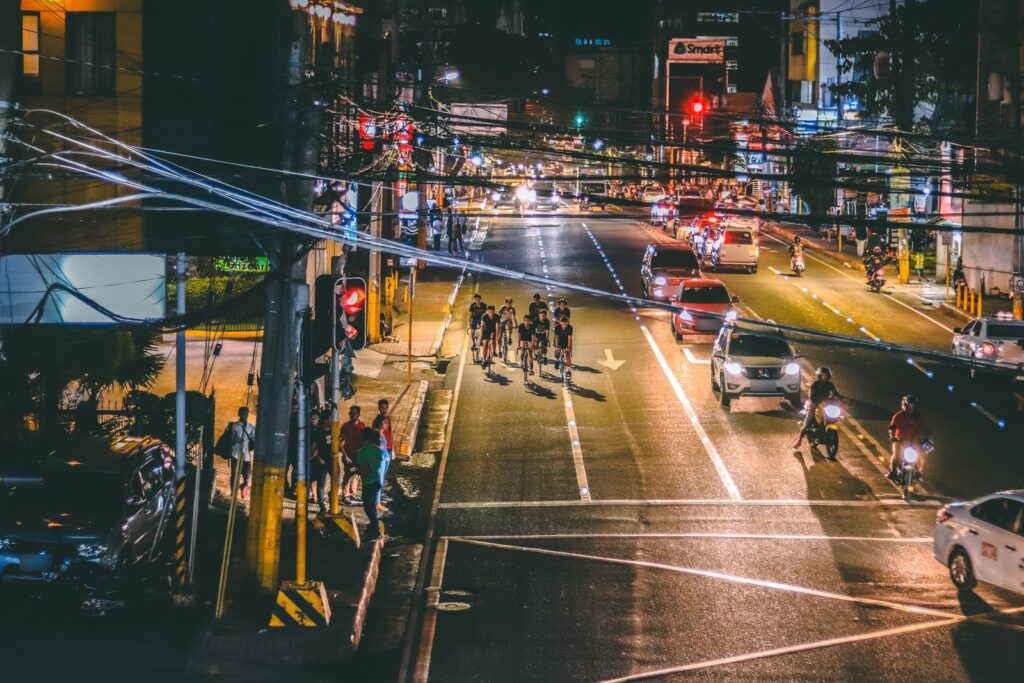
Late on Saturday, October 24, 2026, a Halloween group ride in Montclair turned into every cyclist’s worst fear. According to Montclair police, as reported by ABC7, a suspected drunk driver struck several riders in a group of about 30 people near Kingsley Street and Tudor Avenue just before 11 p.m., then drove away. Two riders died and another suffered major injuries. A 38-year-old man was arrested hours later on suspicion of DUI, felony hit-and-run and gross vehicular manslaughter while intoxicated.
Our hearts are with every family touched by that night. The criminal case will run its own course. For the injured riders and the families who lost someone, though, a very practical question arrives quickly: when one driver hurts several people at once, who actually pays? Here is how that works under California law, and how our hit-and-run accident lawyers approach cases like this one.
One Driver, One Policy, Several Victims
Most auto liability policies have two caps: a per-person limit and a per-accident limit. For California policies issued or renewed on or after January 1, 2025, the legal minimum is $30,000 for the injury or death of one person and $60,000 total for all injuries and deaths in a single accident.
That second number is the hard part of a group crash. If the driver carries only the minimum, every injured rider and every grieving family may be drawing from the same $60,000. No one person can receive more than $30,000, and the total cannot go past $60,000, no matter how many people were hurt. When the claims add up to more than the policy, insurers sometimes ask a court to decide how the money is divided.
That is why it pays to look beyond the driver’s policy early. Other possible sources include the driver’s personal assets, the vehicle’s owner if someone else owns it, and, for many riders, their own insurance. California law generally protects bars, restaurants and hosts who serve alcohol to adults, so claims against the place that served the driver are rarely available.
When the Policy Runs Out or the Driver Has No Insurance
Uninsured motorist (UM) and underinsured motorist (UIM) coverage are part of your own auto policy, and in a crash like this they often matter most.
- UM coverage can apply when the at-fault driver has no insurance at all, or when a hit-and-run driver is never identified. For an unidentified driver, California law generally requires that the crash be reported to police within 24 hours and that a sworn statement be filed with your insurer within 30 days, so prompt reporting protects you.
- UIM coverage can apply when the driver is insured, but not enough. In California, UIM benefits are usually reduced by what the at-fault driver’s insurer pays, so UIM helps most when your limits are higher than the other driver’s limits.
Many riders are surprised to learn that their car insurance can protect them even when they were on a bicycle. California’s standard UM language generally covers the named insured and relatives living in the same household “while occupying a motor vehicle or otherwise,” which can include riding a bike. Medical payments coverage on an auto policy, and ordinary health insurance, may also help with immediate bills. We walk through these claims in more detail on our UM and UIM claims page.
Punitive Damages for Drunk Driving
Ordinary damages compensate. Punitive damages punish. Under California Civil Code section 3294, a jury may award punitive damages when there is clear and convincing evidence of malice, which includes a conscious disregard for the safety of others. In Taylor v. Superior Court (1979), the California Supreme Court held that choosing to drive while intoxicated can support that finding.
Keep two points in mind. First, California public policy generally does not allow insurance to pay punitive damages, so any award usually has to come from the driver personally. Second, punitive damages are generally not available in the wrongful death claim itself, although they may be pursued in a related survival claim brought on behalf of the person’s estate. You can read more in our article on punitive damages in California DUI cases.
Criminal Restitution Is Not the Same as a Civil Claim
If the criminal case ends in a conviction, California law requires the judge to order victim restitution in most cases. Restitution is meant to cover economic losses, such as medical bills, funeral costs and lost wages. It is ordered by the criminal court, and victims do not control how the prosecution is handled.
A civil claim is separate. It is brought by the injured rider or the family, and it can include non-economic damages such as pain and emotional distress, and in a death case, the loss of a loved one’s love, companionship and support. Both cases can move forward at the same time. Restitution that is actually paid is typically credited against the economic part of a civil judgment, so no one is paid twice for the same loss.
Wrongful Death Claims for Families
Under Code of Civil Procedure section 377.60, a wrongful death claim may be brought by the person’s surviving spouse or registered domestic partner, children, and the children of a child who has already passed away. If there are none, the right passes to those who would inherit under California’s intestate succession rules, which can include parents and siblings. Certain dependents, such as a putative spouse, stepchildren, or parents who relied on the person for support, may also qualify.
The general deadline is two years from the date of death, but much shorter deadlines can apply, such as six months for a claim against a public agency.
What to Do After a Group Ride Crash
- Get medical care and keep every record and bill.
- Make sure the crash is reported to police, especially if the driver fled, and get the report number.
- Collect names and phone numbers of fellow riders and witnesses while memories are fresh.
- Save ride photos, helmet or handlebar camera footage, and any GPS ride data.
- Keep your damaged bike, helmet and clothing. Don’t repair or throw them away.
- Notify your own auto insurer promptly, even though you were on a bike.
- Be careful discussing fault or injuries with any insurer before you understand your coverage.
Frequently Asked Questions
If several riders were hurt, does the first person to file get paid first?
Not necessarily. When the limits are too small for everyone, insurers often try to resolve all claims together, and a court can be asked to divide the funds.
Does my car insurance cover me if I was riding a bike?
Often, yes. UM, UIM and medical payments coverage can follow you, not just your car, depending on your policy wording.
Can we still bring a claim while the driver faces criminal charges?
Yes. The criminal case and the civil claim are separate, and both can move forward at the same time.
Who can file a wrongful death claim for a rider who died?
Usually the spouse or domestic partner and children. If there are none, other heirs such as parents may bring the claim, and some dependents may also qualify.
Talk to us
If you were hurt on a ride, or you lost someone you love to a drunk or hit-and-run driver, we are here to help you understand your options, at a pace that respects what your family is going through. Our team is fluent in Spanish and Vietnamese. Visit Win Attorneys at 17291 Irvine Blvd., Suite 210, Tustin, CA 92780, or call us at (562) 296-5380.
This article is general information for educational purposes. It is not legal advice and does not create an attorney-client relationship. Crash details are from Montclair police as reported by ABC7 as of October 27, 2026, and may change as the investigation continues. An arrest is not a conviction. No fault is assigned to anyone. Outcomes depend on the facts of each matter.