
Last updated
By Ron McMinn, Esq. | Last updated: November 25, 2026
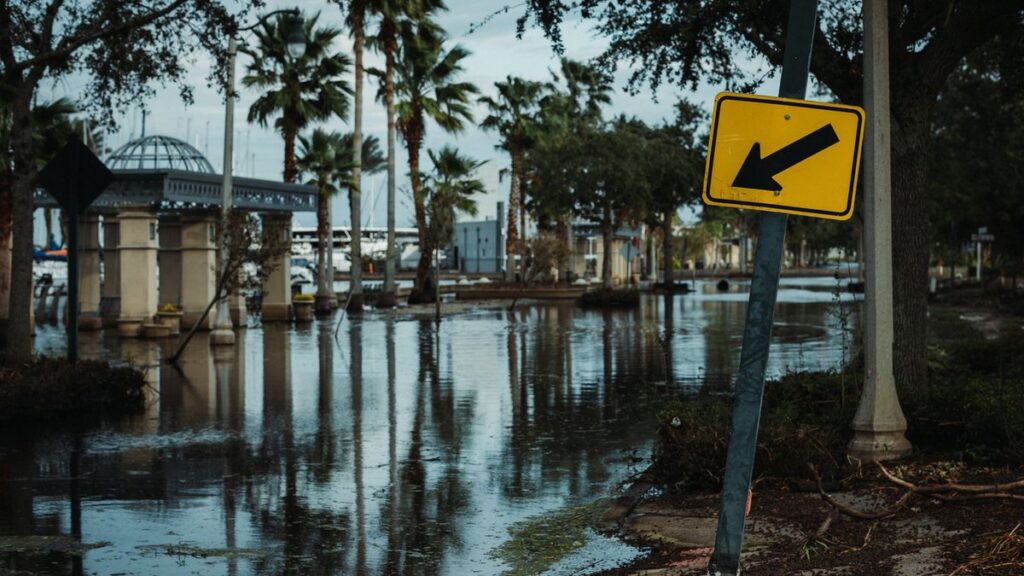
King tides, the highest tides of the year, are arriving along the California coast during Thanksgiving week 2026, and they will return later this winter. The National Weather Service warned of major to extreme coastal flooding in parts of the state, including the San Francisco Bay Area and San Diego, and agencies have already closed or prepared to close some coastal roads. This article explains how a government claim can work after a crash on a road flooded by a king tide. It does not say that any agency is responsible for any crash.
Our earlier guide to flooded freeway crashes in San Diego focuses on stormwater that covered Interstate 5 and Interstate 15 after rain on November 13, 2026. This article is different. It is about tidal flooding on coastal and low-lying roads, statewide, during recurring king tide periods.
Can you claim against Caltrans or a city after a crash on a road flooded by king tides?
Short answer: Sometimes, but a king tide on the road is usually not enough by itself. California law generally protects public agencies from claims based only on weather effects on streets and highways, and it names flood. A claim usually needs a dangerous condition of the property, plus notice or a condition the agency created, and a written claim within six months.
What are king tides, and what was forecast for Thanksgiving week 2026?
The California Coastal Commission describes king tides as the highest predicted tides of the year. The Guardian, in a November 23, 2026 article, reported that Daniel Swain, a climate scientist at the California Institute for Water Resources, called them “the very highest high tide cycles of the year,” produced by the positions of the sun and the moon. The same article, citing the National Weather Service, said San Francisco was facing “major to extreme coastal flooding Thanksgiving week,” and that the Weather Service in San Diego was also projecting major to extreme flooding risk, with a warning that numerous roads may be closed.
Going into the week, The Guardian reported, the risk appeared slightly lower in Southern California because that area was being spared the storm then forecast for the Bay Area. Even so, it reported a major coastal flooding risk in Los Angeles and on the Central Coast on Wednesday and Thursday.
The California Highway Patrol, in a November 24, 2026 advisory, said the Coastal Commission was predicting potentially record-breaking king tides for November 24 to 26 along the entire California coastline, with particularly high water levels and coastal flooding risks across Northern California, the San Francisco Bay Area, the Central Coast, and Southern California. The CHP warned that coastal flooding and erosion could affect highways near the shoreline, and it advised drivers never to drive through standing or moving water covering a road.
The Associated Press, in an article updated November 24, 2026, reported that high king tides had already flooded some low-lying communities in California on Tuesday, including coastal communities in Marin County that morning and several homes in Corte Madera by the afternoon. A National Weather Service forecaster told the AP that Bay Area tides could peak Wednesday at 2.8 feet above normal, compared with a record of 2.9 feet above normal in San Francisco on January 27, 1983. The AP also reported that the Humboldt County sheriff’s office had ordered evacuations in a small coastal community after buildings flooded on Monday.
These reports describe flood risk, road closures, and some flooding of communities and homes. They do not describe a particular crash, and they are not a finding that any agency is at fault.
When are the later king tide periods this winter?
The California Coastal Commission’s King Tides Project lists statewide periods of November 24 to 26, 2026, December 23 to 25, 2026, and January 21 to 22, 2027. It notes that some Northern California locations may also include December 22, January 20, or January 23. Those dates are based on the highest predicted astronomical tides and, the Commission says, do not include storm surge or El Niño effects.
A November 19, 2026 Caltrans advisory for Marin County used slightly wider windows for when king tides were scheduled to affect coastal and low-lying areas there: the week of November 22 to 28, December 20 to 27, January 18 to 24, 2027, and February 16 to 22, 2027. The February window appears in that Caltrans advisory. It does not appear on the Coastal Commission’s statewide project list.
The Guardian also reported that the same combination of flood-risk factors would recur around Christmas and in late January, so the state would need favorable timing more than once.
What have Caltrans and cities said about flooded coastal roads?
Caltrans said in its Marin County advisory that maintenance will continue to close the northbound U.S. 101 connector to northbound State Route 1 in Mill Valley when high tides, king tides, or storms affect the roadway. As of that November 19 advisory, no closures were scheduled, but Caltrans warned that areas like that one could become impassable during tide or storm events. It also said the lower half of the Manzanita Park and Ride lot would continue to be closed because of flooding, and that shoulder parking on State Route 1 could be affected.
Separately, Caltrans announced a precautionary closure of State Route 260, the Posey Tube between Alameda and Oakland, from 8 p.m. on Sunday, November 22, through 5 p.m. on Friday, November 27, because of anticipated king tide impacts.
On November 24, the Governor’s Office said Caltrans crews had finished installing a temporary flood barrier near the San Francisco-Oakland Bay Bridge toll plaza to protect westbound Interstate 80 from high-tide flooding, and that the westbound shoulder there would stay closed while crews monitored it. The same update said crews were also installing temporary flood protection along Doolittle Drive near Oakland International Airport and at the Posey Tube, and it mentioned recent work to raise flood-prone stretches of State Route 37 and to repair seawalls along Pacific Coast Highway.
In Huntington Beach, a November 19 city notice said the city and Caltrans would implement temporary road closures in low-lying areas from November 23 to 27, generally from 6 a.m. to 2 p.m. each weekday, including Pacific Coast Highway between Seal Beach Boulevard and Warner Avenue, along with several local streets. Times could change with the tide, the weather, and public safety needs.
A closure or a warning is not a finding that an agency is responsible for a crash. It can still matter later, because records of prior flooding, planned closures, and maintenance at the same spot often bear on notice.
Why isn’t a king tide alone usually enough for a claim?
Government Code section 831 says that a public entity is not liable for an injury caused by the effect of weather conditions on the use of streets and highways. For purposes of that section, the effect of weather conditions includes the effect of fog, wind, rain, flood, ice, or snow. The section does not apply to physical damage to, or deterioration of, a street or highway resulting from weather. And it does not protect an agency when that effect would not be reasonably apparent to, and would not be anticipated by, a person exercising due care.
King tides are astronomical events, not storms. Water that a high tide leaves on a coastal road can still look like the flooding that section 831 names. Whether a particular inundation is treated as a weather effect under that statute is a fact-specific question. This article does not resolve it for any location.
A claim usually needs more than the tide itself. Our guide to flooded freeway crashes in San Diego explains the same weather rule in the setting of rain on a San Diego interstate. Drivers also keep their own duties. California’s basic speed law, Vehicle Code section 22350, requires a speed that is safe for the weather and the road. The CHP’s Thanksgiving advisory told drivers to turn around and find another route rather than drive through water covering a road. If another driver hit you, that driver’s insurance is often the first claim to consider.
What does a dangerous-condition claim require?
Under Government Code section 835, a public entity can be liable for an injury caused by a dangerous condition of its property if the person shows that:
- The property was in a dangerous condition at the time of the injury. Section 830 defines that as a condition that creates a substantial, not minor or trivial, risk of injury when the property is used with due care in a reasonably foreseeable way.
- The dangerous condition caused the injury.
- The condition created a reasonably foreseeable risk of the kind of injury that happened.
- Either a public employee’s negligent or wrongful act or omission created the condition, or the agency had actual or constructive notice of it in time to protect against it.
Notice is often the key fight. Under section 835.2, actual notice means the agency knew about the condition and knew or should have known it was dangerous. Constructive notice means the condition existed long enough, and was obvious enough, that the agency, exercising due care, should have discovered it and its dangerous character. For a low-lying coastal road that has flooded in earlier king tide cycles, records that can bear on notice include prior flooding reports at the same spot, maintenance and inspection logs for drains, pumps, berms, and barriers, citizen complaints, planned or repeated closures, and weather-service or agency alerts.
Warning signs, barricades, and temporary closures can also be part of the facts. They do not automatically prove or disprove a claim. Every case turns on its own record. This article does not say that any California road is in a dangerous condition.
What is design immunity, in general terms?
A separate statute, Government Code section 830.6, can protect a public entity from liability for an injury caused by the plan or design of a construction or improvement to public property. In general terms, that protection can apply if the plan or design was approved in advance by the legislative body or by an employee with authority to approve it, or was prepared in conformity with previously approved standards, and if there is substantial evidence that a reasonable employee or legislative body could have adopted or approved it.
The same section says that even after notice that the property may no longer conform to an approved plan, design, or standard, the immunity continues for a reasonable period of time so the agency can obtain funds and carry out remedial work. If the agency cannot remedy the condition because of practical impossibility or lack of funds, the immunity remains so long as the agency reasonably attempts to provide adequate warnings of the condition.
Those are general rules. They are not a conclusion that design immunity applies, or does not apply, to any particular coastal road or king tide event.
Who should receive the claim, Caltrans or the city?
It depends on who owns and maintains the exact place where the crash happened, including the drains and pumps. Caltrans generally maintains state highways, including U.S. 101, State Route 1 (including stretches known as Pacific Coast Highway), Interstate 80, State Route 37, and State Route 260. Surface streets in a city are usually the city’s responsibility. Roads in unincorporated areas are usually the county’s. A city street that meets a state highway, or a state connector that meets a local road, can require a careful look at the boundary.
Our step-by-step guide on how to file a claim against Caltrans explains the state process, including when a claim goes to a Caltrans district office and when it goes to the Department of General Services. A claim against a city or county is presented to that entity, not to Caltrans. Filing against the wrong agency can cost time that the six-month deadline does not give back.
What is the six-month government claim deadline?
For death, personal injury, or damage to personal property, a written claim generally must be presented to the public entity no later than six months after the claim accrues, under Government Code section 911.2. In most injury cases that date is the day of the crash, but not always. In general, a lawsuit for money against a public entity cannot be filed until that claim has been presented and has been acted on or rejected.
If the six months have already passed, California allows a written application for leave to present a late claim. That application must be made within a reasonable time and, in any event, not more than one year after the claim accrues. Our guide to missed six-month government claim deadlines and late claim applications explains that process, including what happens if the agency denies the application. Those dates are short and strict. This article is a reason to act promptly, not a reason to wait.
Talk to us
If you were hurt in a crash on a California road that was flooded during a king tide, we are here to listen and to explain your options. Win Attorneys represents injured people throughout California. Talk to us at (657) 235-8097. We speak Spanish and Vietnamese.
Hablamos español. Chúng tôi nói tiếng Việt.
Office
Win Attorneys
17291 Irvine Blvd., Suite 210, Tustin, CA 92780
This article is general information and is not legal advice. Reading it does not create an attorney-client relationship.
Sources: The Guardian, November 23, 2026, Associated Press, updated November 24, 2026, California Highway Patrol, November 24, 2026, California Coastal Commission King Tides Project, Caltrans Marin County advisory, November 19, 2026, Caltrans Posey Tube advisory, November 20, 2026, Office of the Governor, November 24, 2026, City of Huntington Beach, November 19, 2026, Government Code section 831, section 830, section 835, section 835.2, section 830.6, section 911.2, Vehicle Code section 22350.
Frequently asked questions
Can I claim against Caltrans or a city if I crashed on a road flooded by a king tide?
Sometimes, but the tide itself is usually not enough. A claim usually needs a dangerous condition of the property, plus proof the agency created the condition or had notice and time to protect against it, and a written claim within six months.
Does Government Code section 831 automatically bar a king tide claim?
Not automatically. Section 831 generally protects agencies from claims based only on the effect of weather on streets and highways, and it names flood. Whether a particular king tide inundation is treated as that kind of weather effect is a fact-specific question. A claim usually still needs a dangerous condition of the property itself.
What is the deadline to file a claim against Caltrans or a city?
For injury, death, or damage to personal property, a written claim generally must be presented within six months under Government Code section 911.2. If that deadline is missed, a late claim application may still be possible within one year. Our late claim guide explains that process.
Who should receive the claim if the flooded road is a state highway or a city street?
Caltrans generally maintains state highways, including U.S. 101, State Route 1, and Interstate 80. City streets are usually the city’s responsibility, and roads in unincorporated areas are usually the county’s. Ownership of the exact spot, including the drains, decides which agency gets the claim.
What is design immunity in a flooded-road claim?
Government Code section 830.6 can protect an agency from liability for an injury caused by an approved plan or design of a construction or improvement, if statutory conditions are met. Even after notice that the property may no longer conform, the immunity continues for a reasonable time to fund and carry out repairs, and it can remain if the agency cannot remedy the condition and reasonably attempts to give adequate warnings. This article does not say whether that statute applies to any particular road.
When are the next king tide periods in California this winter?
The Coastal Commission lists statewide periods of November 24 to 26, 2026, December 23 to 25, 2026, and January 21 to 22, 2027, with some Northern California locations also including December 22, January 20, or January 23. A Caltrans Marin County advisory also listed February 16 to 22, 2027, as a window when king tides were scheduled to affect low-lying areas there.