
Last updated · Reviewed by Ron McMinn, Esq.
The Orange County Transportation Authority says it owns about 40 miles of rail between San Clemente and Fullerton, and Metrolink and Amtrak run trains over it. A claim against Metrolink or another public agency generally starts with a written government claim within six months.
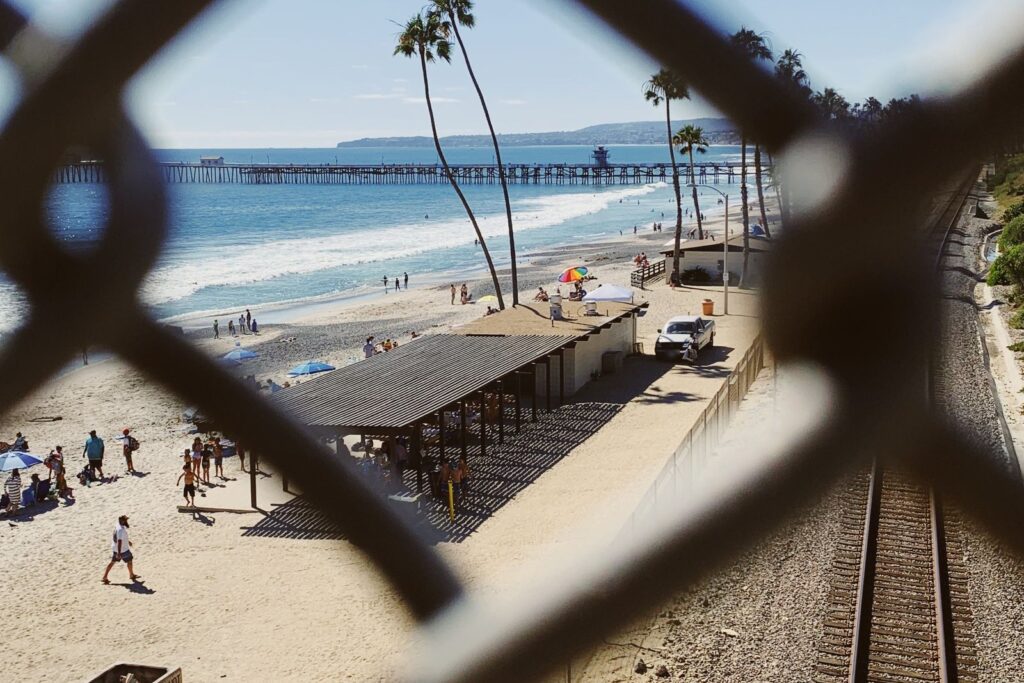
Metrolink suspended Orange County Line service between Oceanside and the Laguna Niguel and Mission Viejo station for five days, beginning Monday, October 26, 2026, and running through Friday, because of anticipated high tides along the southern Orange County coast, KPBS reports in a City News Service story. Orange County Line trains are running only between Los Angeles Union Station and Laguna Niguel and Mission Viejo, and Metrolink is not providing replacement buses for the affected stretch. KPBS also reports that in September, high tides and powerful waves overtopped the tracks near San Clemente, causing coastal track erosion and slope damage and a temporary suspension of Metrolink, Amtrak and freight service while crews made emergency repairs.
Metrolink said the pause is meant to prevent widespread delays and cancellations, and that qualified personnel will inspect the track frequently. Amtrak Pacific Surfliner trains are expected to keep running through the corridor as long as conditions remain safe. The reports do not describe any injury, and we are not suggesting the track is unsafe today. But riders in Irvine, Tustin and across Orange County are asking a fair question: who is responsible for track safety on this coast, and what happens legally if something goes wrong? Our Metrolink accident lawyers explain the general rules below.
Who Is Responsible for Coastal Track Safety
Several agencies touch this corridor, and owning the track is not the same as running the trains. Here is what public sources say:
- OCTA. The Orange County Transportation Authority says it owns about 40 miles of rail between San Clemente and Fullerton, part of the 351-mile LOSSAN corridor. Its September 28, 2026 emergency declaration authorizes shoreline protection and sand placement to protect the coastal railroad in San Clemente.
- Metrolink. Metrolink is operated by the Southern California Regional Rail Authority, a joint powers authority whose members include OCTA. OCTA’s coastal projects page says the board directed Metrolink to repair and replace riprap at the coastal emergency sites.
- LOSSAN and Amtrak. The Pacific Surfliner is managed by the LOSSAN Rail Corridor Agency, a joint powers authority, and Amtrak operates the trains, according to SANDAG.
- NCTD. South of the county line, the North County Transit District owns the tracks to the southern end of Del Mar and runs COASTER trains.
Who is legally responsible for a given incident depends on who owned or controlled the property, who operated the train, and who did the work. That can be several parties at once.
If Unsafe Track Injures a Rider
There are two common legal paths. The first is operator negligence. Civil Code section 2100 requires a carrier of persons for reward to use the utmost care and diligence for their safe carriage, and our guide to train passenger rights after a major crash explains how courts look at crew and operator negligence. Our post on Metrolink train injuries and the common carrier duty covers Metrolink in detail.
The second path is a dangerous condition of public property. Under Government Code section 835, a public entity can be liable when a dangerous condition of its property caused the injury, the injury was reasonably foreseeable from that condition, and either an employee created the condition or the entity had actual or constructive notice of it in time to fix it. Section 830 defines a dangerous condition as one that creates a substantial risk of injury when the property is used with due care, and section 835.2 explains notice. Whether any stretch of track was dangerous, and whether an owner knew and had time to respond, are fact questions. Public repair work does not by itself show a dangerous condition, and it does not by itself rule one out.
The Six-Month Claim Deadline
Claims against public entities such as OCTA, NCTD or the rail authority that runs Metrolink generally start with a written claim presented within six months, under Government Code section 911.2. A late-claim application is possible under section 911.4 but is not guaranteed, and after a rejection section 945.6 sets a short window to file suit. Knowing which agency to name is part of the work, because a claim goes to the entity that owns, controls or operates the property or vehicle involved. See our government claims page.
Amtrak Is Different
Amtrak is a federally chartered corporation, and 49 U.S.C. 24301 says it is not a department, agency or instrumentality of the federal government. So the public entity claim rules apply to the government agencies involved, not automatically to Amtrak, and any Amtrak time limit should be checked early. Federal law also caps total liability for a single rail passenger accident. Under 49 U.S.C. 28103, as adjusted by a Federal Register notice effective September 4, 2026, the cap is $401.9 million for all claims against all defendants from one accident. See our Amtrak accident page.
What Riders in Irvine, Tustin and Beyond Should Do
Metrolink’s Orange County Line serves Tustin, Irvine and other Orange County stations, and service changes like this one can affect daily commutes. Check metrolinktrains.com before you travel. If you are ever hurt on a train or platform, report it to the crew or agency, get medical care, save your ticket or pass, and photograph the scene and any hazard. Riders on the Los Angeles end of the line can also read about train accident lawyers serving Los Angeles County. Our post on injuries at Metro and Metrolink stations covers platforms and stations.
Frequently Asked Questions
Who owns the railroad track through San Clemente?
The Orange County Transportation Authority says it owns about 40 miles of rail between San Clemente and Fullerton, and its coastal rail projects describe the San Clemente line as OCTA’s railroad right-of-way. Metrolink and Amtrak run trains over it.
Can I bring a claim because a train was canceled or delayed?
A cancellation or delay by itself is not a personal injury. An injury claim needs an actual injury and a legal basis, such as unsafe property or carrier negligence.
How long do I have to act after a Metrolink injury?
A claim against Metrolink or another public agency generally starts with a written government claim within six months. Missing that date can end the case, so ask about it early.
Does the Amtrak liability cap apply to every claim?
No. Federal law caps total claims from a single rail passenger accident at $401.9 million for all passengers and all defendants combined, so it matters mainly in the largest crashes.
Talk to us
If you were hurt on a train, platform or other public transit in California, we can explain your options and the deadlines that apply, without pressure. We help clients statewide across California, including Irvine, Tustin and the rest of Orange County, and our team speaks Spanish and Vietnamese. Visit Win Attorneys at 17291 Irvine Blvd., Suite 210, Tustin, CA 92780, or call us at (562) 296-5380.
This article is general information for educational purposes. It is not legal advice and does not create an attorney-client relationship. Service details are from KPBS (City News Service), the Orange County Transportation Authority and Metrolink as of October 28, 2026, and may change. No injuries or fault are alleged. Outcomes depend on the facts of each matter.